


NadPure Blood Genomic DNA Kit
#1010102
The kit provides a safe and convenient extraction workflow without the use of toxic reagents such as phenol or chloroform. It effectively removes proteins, inorganic salts, and other contaminants while maintaining high nucleic acid recovery. The purified nucleic acids can be directly used for a variety of downstream applications, including PCR, qPCR, RT-PCR, Southern blotting, genotyping, and the library preparation of next-generation sequencing.
- Product Details
- Kit Content
- FAQ
- Ordering Information
- Resources
Featuer
Workflow
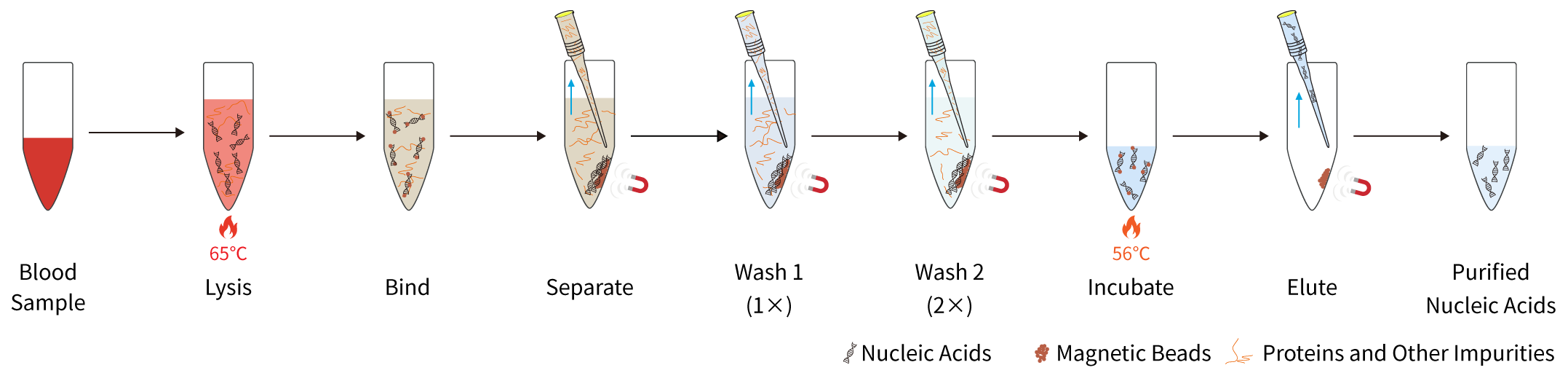
Performance
Flexible Compatibility Across Sample Input Volumes
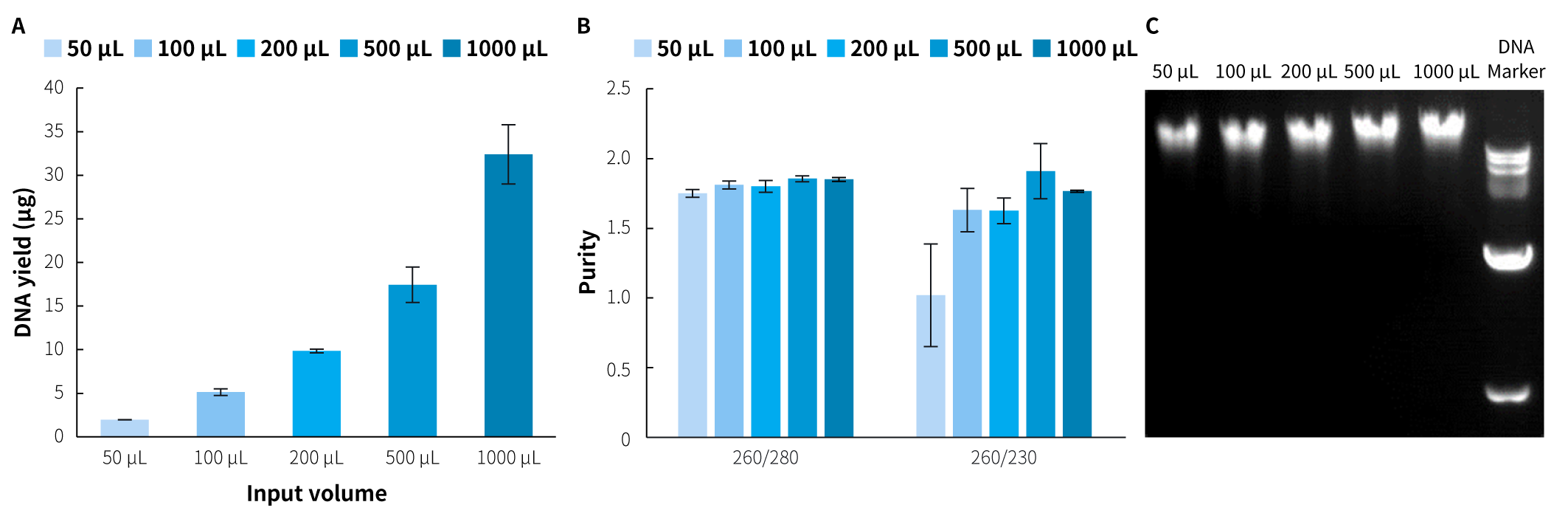
Figure 1. Performance of the NadPure Blood Genomic DNA Kit for gDNA extraction form the whole blood at different input volumes. A. DNA Yield; B. DNA Purity; C. Agarose gel electrophoresis of extracted gDNA (100 ng loaded per lane; the same loading amount applies to subsequent figures unless otherwise specified).
Broad Compatibility with Samples of Varying Quality
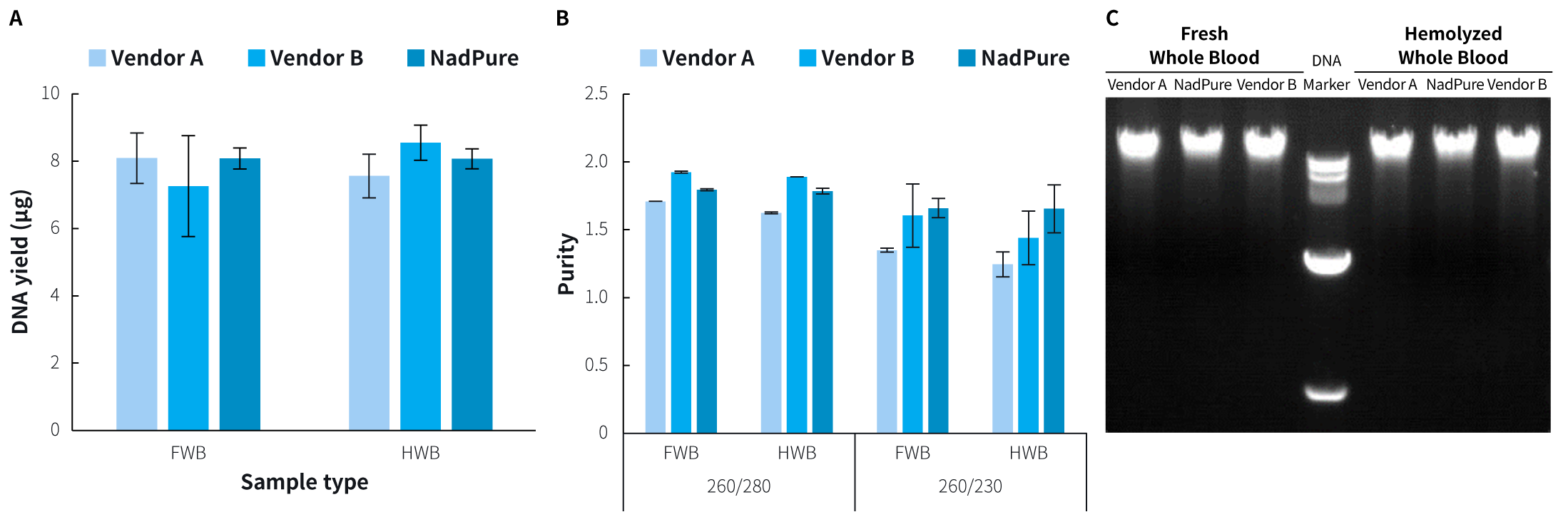
Figure 2. Comparison of the extraction performance among different magnetic bead-based blood gDNA extraction kits using various types of blood samples. A. DNA yield; B. DNA purity; C. Agarose gel electrophoresis of extracted gDNA. gDNA was extracted from fresh and hemolyzed whole blood samples using the NadPure Blood Genomic DNA Kit
and comparable kits from Vendor A & B, respectively.
Note: The initial sample input volume was 200 μL for all samples. FWB: Fresh whole blood; HWB: Hemolyzed whole blood.
Reliable Capability Against Diverse Interfering Substances
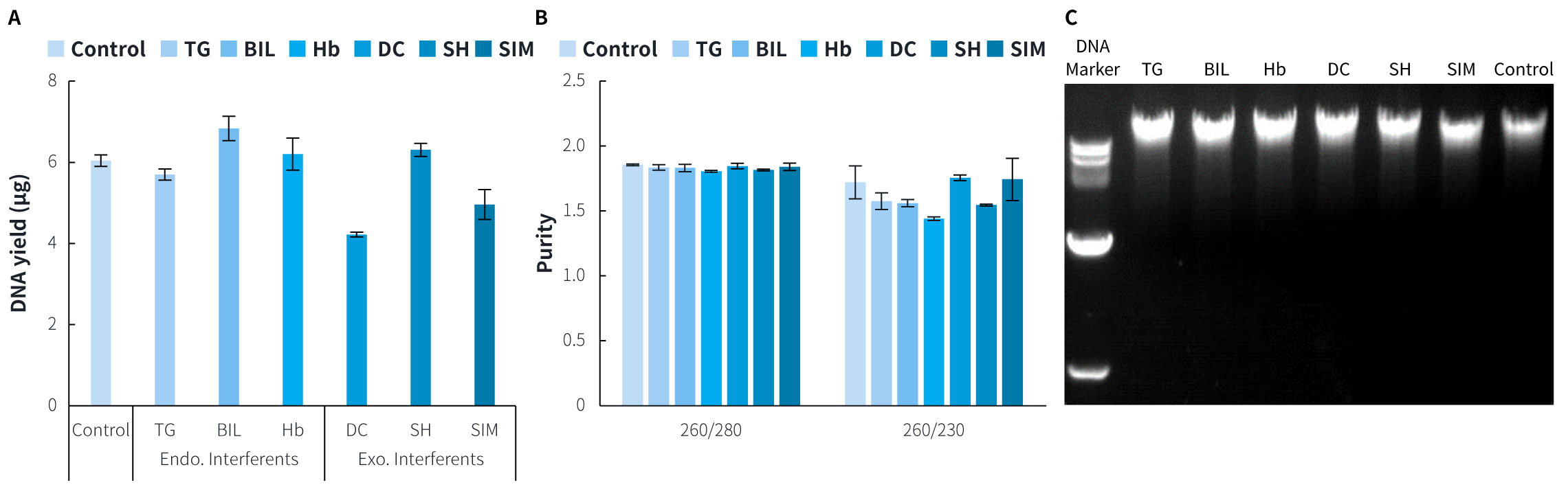
Figure 3. Performance of the NadPure Blood Genomic DNA Kit for blood gDNA extraction in the presence of various interfering substances. gDNA was extracted
from simulated blood samples containing various endogenous and exogenous interfering substances using the NadPured Blood Genomic DNA Kit, and the quality of the extracted products was evaluated. A. DNA yield; B. DNA purity; C. Agarose gel electrophoresis of extracted gDNA.
Note: Based on relevant NMPA/FDA review and guidance documents and authoritative international literature, interfering substances were added at concentrations
considered clinically relevant. For each group, 100 μL of whole blood was used as the initial sample, and the corresponding amount of each interfering substance was added.The volume was then brought to 200 μL with 1X PBS, followed by gDNA extraction according to the kit’s standard operating procedure. TG: Triglycerides; BIL: BilirubinTriglycerides: Hb: Hemoglobin; DC: Disodium citrate: SH: Sodium heparin; SIM: Simvastatin.
Consistent Performance Across Manufacturing Batches
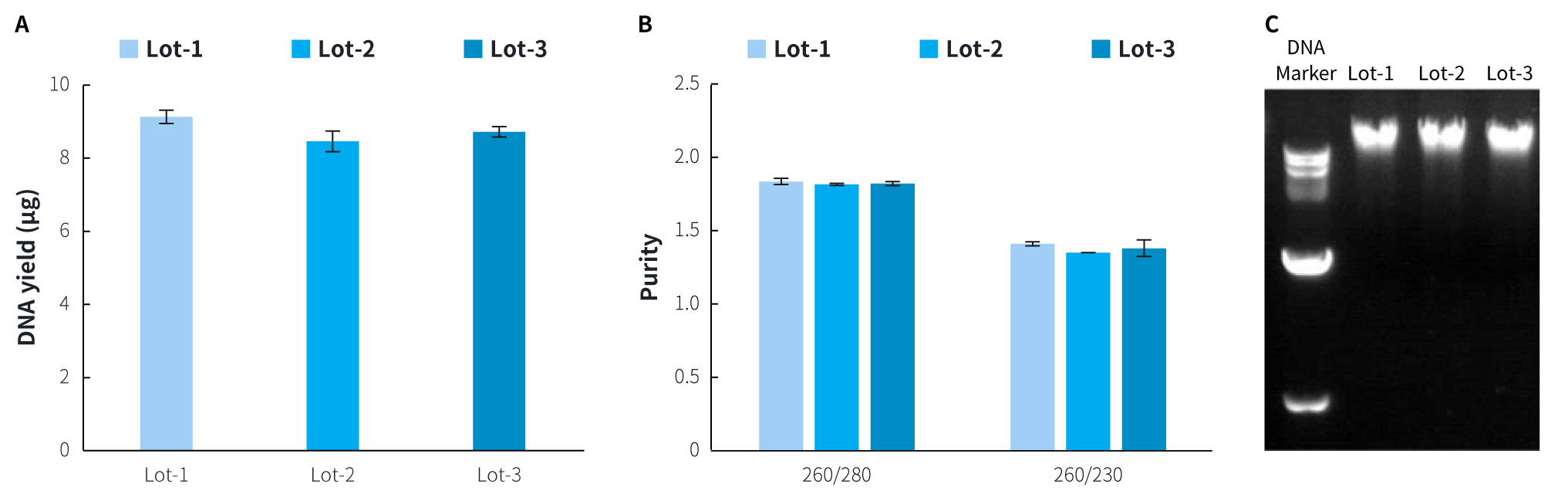
Figure 4. NadPure Blood Genomic DNA Kit demonstrates good consistency in gDNA extraction from blood samples across different batches. A. DNA yield; B. DNA purity; C. Agarose gel electrophoresis of extracted gDNA.
Note: The initial sample input volume was 200 μL for all samples.
High-Quality Nucleic Acids for Downstream Applications
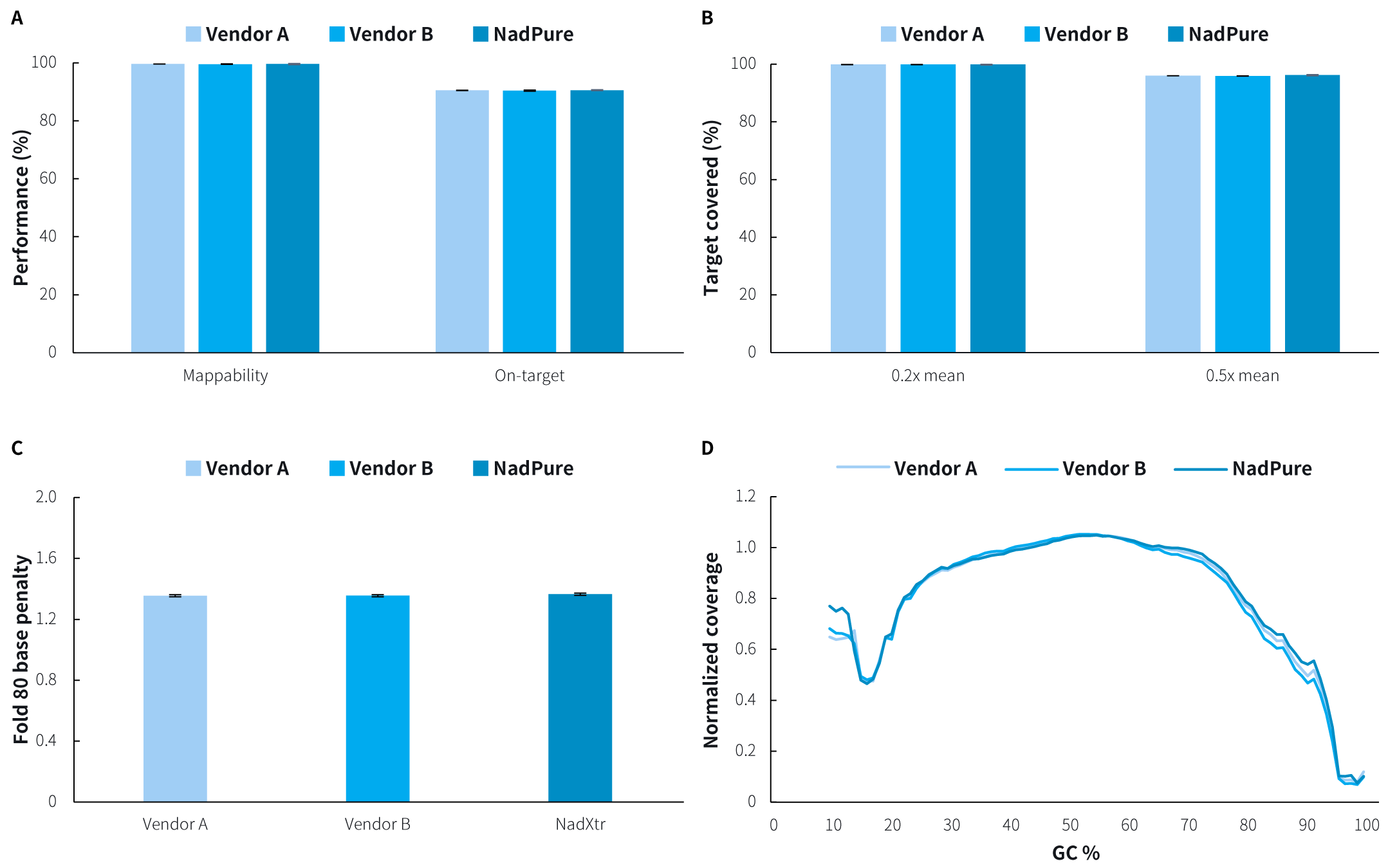
Figure 5. NGS targeted capture libraries prepared using gDNA extracted with the NadPure Blood Genomic DNA Kit demonstrate quality comparable to that of libraries prepared using other suppliers’ kits. A. Mappability and On-target rate; B. Target covered; C. Fold 80 base penalty; D. GC bias. gDNA was extracted from fresh whole blood samples using the NadPure Blood Genomic DNA Kit and Vendor A & B, respectively. Pre-libraries were prepared using the NadPrep EZ DNA Library Preparation Kit v3, followed by hybridization capture using the NadPrep ES Hybrid Capture Reagents v2 and the NanOnco Plus Panel v3.0. Raw reads were aligned to the human reference genome using BWA. On-target rate was calculated by the number of reads. Sequencing was performed on the NovaSeq 6000, PE150.
For research use only. Not for use in diagnostic procedures.
| Package |
Color of Cap Tube
|
Component |
Volume 1010101 (24 rxn) |
| Box1 |
/ |
Blood-Lysis Buffer | 7.5 mL |
|
/ |
Blood-Wash Buffer 1 | 8 mL | |
|
/ |
Blood-Wash Buffer 2 | 2×4.5 mL | |
|
/ |
Elution Buffer | 2.5 mL | |
|
|
Blood-Magnetic Beads | 720 μL | |
| Box 2 |
|
Proteinase K | 480 μL |
| Package |
Color of Cap Tube
|
Component |
Volume 1010102 (96 rxn) |
| Box1 |
/ |
Blood-Lysis Buffer | 30 mL |
|
/ |
Blood-Wash Buffer 1 | 35 mL | |
|
/ |
Blood-Wash Buffer 2 | 2×18 mL | |
|
/ |
Elution Buffer | 10 mL | |
|
/ |
Blood-Magnetic Beads | 3 mL | |
| Box 2 |
|
Proteinase K | 1,000 μL |
For research use only. Not for use in diagnostic procedures.
Yes. However, sample quality may affect DNA extraction performance. In general, fresh blood samples stored under appropriate conditions are more likely to get high-quality genomic DNA. Samples that are of poor quality or have been stored for prolonged periods may result in a low DNA yield and purity. For such samples, the extraction performance can be optimized by increasing the amount of Proteinase K or extending the lysis time.
Yes. For a 100 μL concentrated blood sample, refer to the extraction procedure for a 200 μL blood sample in this user manual. If the actual sample volume differs, adjust the sample pretreatment procedure and the volumes of the relevant reagents according to the instructions for different sample volumes provided in this manual.
The recommended standard input volume for this kit is 200 μL. For blood samples of other volumes, refer to the Protocol section of this user manual for specific processing requirements for different sample volumes. For blood input volumes of 200-1,000 μL, if a Red Blood Cell Lysis Buffer is unavailable, the validated pretreatment procedure can be used. For example, add 3X volumes of 1X PBS to the blood sample (e.g., add 900 μL of 1X PBS to 300 μL of blood sample). Mix thoroughly by inversion and centrifuge at 2,000 × g for 5 min. Carefully remove and discard the supernatant using a pipette. Add 200 μL of 1X PBS and vortex to mix thoroughly, then proceed with the Genomic DNA Extraction Workflow.
| Product | Ctalog# |
|
NadPure Blood Genomic DNA Kit, 24 rxn |
1010101 |
|
NadPure Blood Genomic DNA Kit, 96 rxn |
1010102 |
Solutions
- Methyl Library Preparation Total Solution
- Sequencing single library on different platform--Universal Stubby Adapter (UDI)
- HRD score Analysis
- Unique Dual Index for MGI platforms
- RNA-Cap Sequencing of Human Respiratory Viruses Including SARS-CoV-2
- Total Solution for RNA-Cap Sequencing
- Total Solution for MGI Platforms
- Whole Exome Sequencing
- Low-frequency Mutation Analysis
Events
-
Exhibition Preview | Nanodigmbio invites you to join us at Boston 2025 Annual Meeting of the American Society of Human Genetics (ASHG)
-
Exhibition Preview | Nanodigmbio Invites You to Join Us at WHX & WHX Labs Kuala Lumpur 2025, Malaysia International Trade and Exhibition Centre in Kuala Lumpur

-
Exhibition Preview | Nanodigmbio Invites You to Join Us at Hospitalar 2025, Brazil International Medical Device Exhibition in São Paulo

-
Exhibition Preview | Nanodigmbio invites you to join us at Denver 2024 Annual Meeting of the American Society of Human Genetics (ASHG)

-
Exhibition Preview | Nanodigmbio invites you to join us at Sapporo 2024 Annual Meeting of the Japan Society of Human Genetics (JSHG)

-
Exhibition Preview | Nanodigmbio invites you to join us at Association for Diagnostics & Laboratory Medicine (ADLM)

Nanodigmbio will contact you within 1 day.
If there are any problems, please contact us by 400 8717 699 / support@njnad.com