
Nanodigmbio Targeted Capture Solution Enables Simultaneous Detection of Methylation and Mutations with TAPS+
01 Background
1.1 The Challenges of Conventional MethylationMutation Detection Assays
Currently, bisulfite sequencing (BS-seq) remains the widely applied gold-standard technology for methylation detection. Its principle relies on bisulfite to convert unmethylated cytosine (C) into uracil (U) and then into thymine (T), while methylated cytosine remains largely unchanged, thereby enabling the detection of DNA methylation status. However, the extensive C>T conversion substantially reduces the base complexity of the library and makes it difficult to accurately distinguish some genuine C>T/G>A genetic variants from conversion-induced base changes. Therefore, obtaining both methylation and gene mutation information in parallel requires splitting the sample into two portions—one for methylation sequencing and one for routine mutation sequencing—and completing two independent library preparation, capture, and sequencing workflows.
This approach introduces several practical challenges: 1) It doubles the consumption of precious low-input samples, such as cfDNA and FFPE samples; 2) multi-step experiments introduce batch effects, complicating the interpretation of associations between methylation and mutation signals; 3) long experimental turnaround and high sequencing cost limit the application to cohort samples and low-input clinical samples. Therefore, developing a single testing workflow that can simultaneously obtain methylation and genetic variant information from limited samples, while improving testing efficiency and data integration capabilities, has become an important research direction.
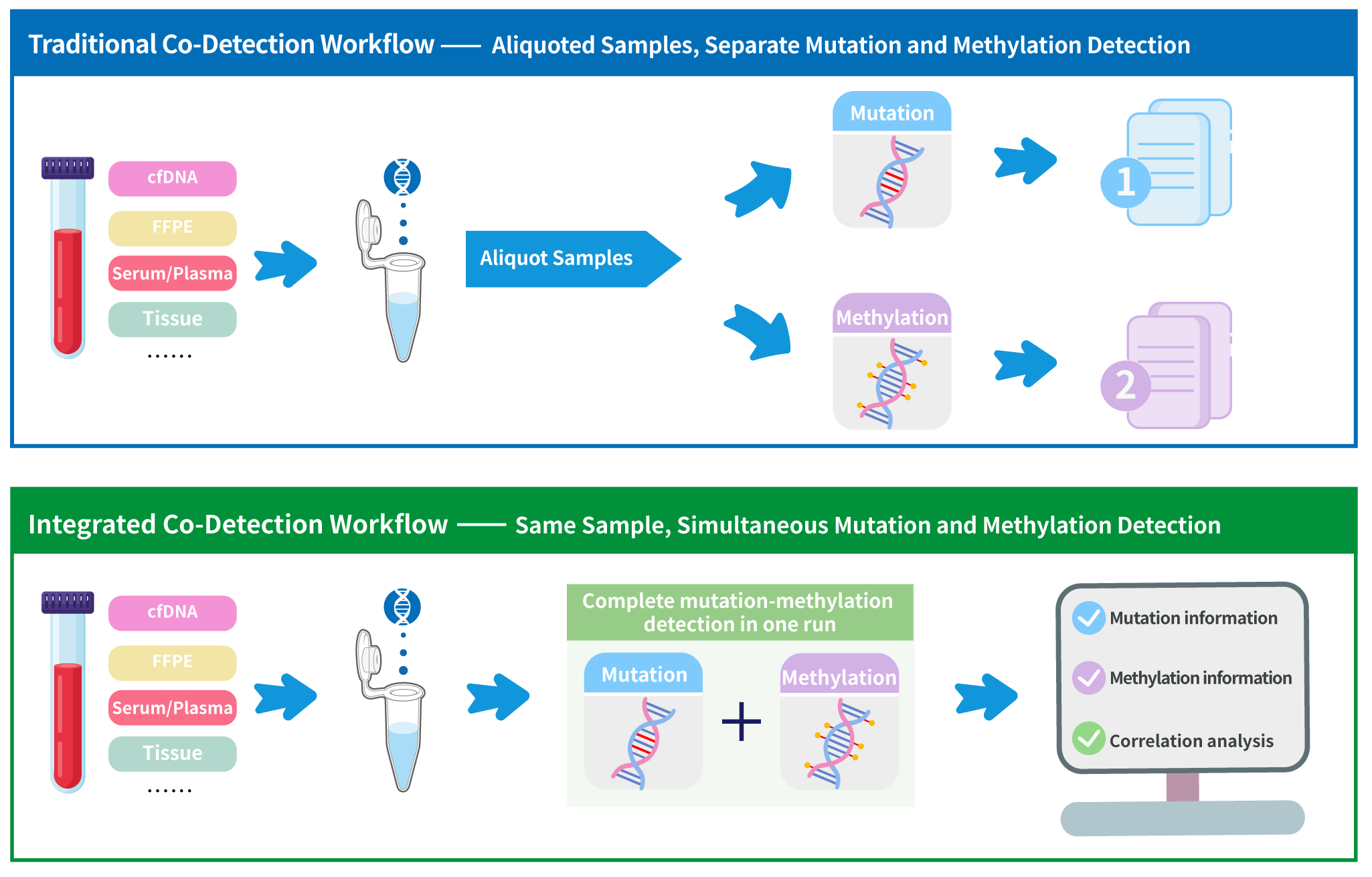
1.2 TAPS+ Offers a New Option for Co-detection of Methylation and Mutations
In recent years, the emergence of enzyme-based positive methylation conversion technologies such as TAPS (TET-assisted pyridine borane sequencing) [1] has opened a new path for co-detection of methylation and mutations. TAPS converts 5-methylcytosine (5mC) and 5-hydroxymethylcytosine (5hmC) into T, while unmethylated C remains unconverted. This helps preserve the diversity of the original ATCG sequence and maintain library complexity to the greatest extent possible. This positive-readout conversion method does not require destruction of the original genomic sequence. Methylation signals are directly read as a fifth base, effectively preserving genetic variant information (such as SNVs, InDels, CNVs, and SVs) and avoiding issues associated with traditional BS-seq, including nucleic acid damage, sequence distortion, and information loss.
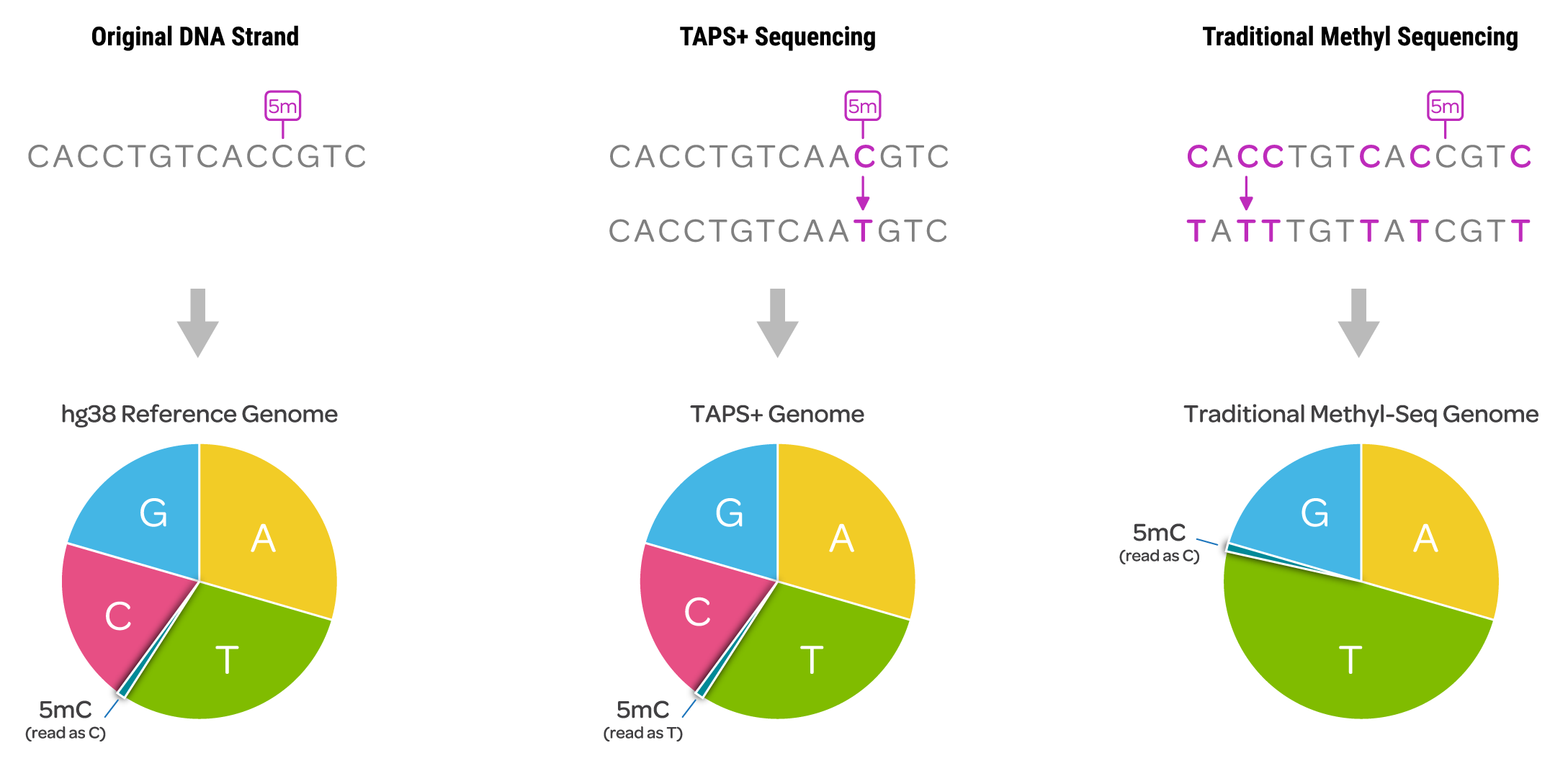
Image credit: Watchmaker Genomics
1.3 Nanodigmbio × TAPS+: Targeted Enrichment Solution
Currently, publicly available TAPS+ applications are dominated by whole-genome sequencing (WGS), which is limited by relatively high sequencing cost and substantial data redundancy. For research and clinical testing focused on specific methylation biomarkers or genetic variants, targeted capture can effectively enrich target regions and improve sequencing data utilization efficiency. However, standardized probe design and supporting targeted capture systems compatible with the sequence features of TAPS+-converted libraries remain relatively limited.
With years of experience in the field of targeted capture, Nanodigmbio has leveraged its proprietary probes and mature library preparation and hybrid capture technologies to launch an integrated targeted capture solution compatible with enzymatically methylation-converted libraries prepared using Watchmaker Genomics TAPS+. Targeting the sequence features of TAPS+-converted libraries, probes are designed using the dual-state approach and combined with Nandodigmbio’s newly launched μCaler HyperMix Hybrid Capture Kit to achieve efficient enrichment of TAPS+-converted libraries, further advancing the technical pathway for targeted methylation detection.
Combining TAPS+ enzymatic conversion with Nanodigmbio's targeted capture solution fully leverages the technical advantages of both technologies. It enables simultaneous and precise characterization of sample methylation levels and multiple types of genetic variants within a single library and a single hybrid capture reaction. It provides a one-stop workflow for integrated analysis of epigenetic modifications and molecular variants. It can provide more precise, efficient, and reliable technical support for tumor biomarker discovery, epigenetic mechanism studies, and translational medical research.
02 Experimental Design
Assay 1
Performance Comparison of Two Methylation Conversion Methods: TAPS+ and UMBS
▶ Sample source: plasma cfDNA from healthy human donors.
▶ Library preparation:
1) TAPS+-Converted Library: A methylation library was prepared using the Watchmaker DNA Library Prep Kit with TAPS+ (from Watchmaker Genomics) in combination with the NadPrep Universal Stubby Adapter (UDI) Module.
2) UMBS (Ultra-Mild Bisulfite Sequencing, UMBS-seq)-Converted Library: A methylation library was prepared using the NadPrep Methyl Library Preparation Module v2 in combination with the NadPrep Methyl Stubby Adapter (UDI) Module v2 (for Illumina®) and the UMBS conversion module [BNUFT® Ultrafast Bisulfite Kit (Bionova, BN4300-005)].
Assay 2
Performance Validation of TAPS+ Combined with the Nanodigmbio Hybrid Capture System
▶ Sample sources: Pan-cancer 800 gDNA reference standard and simulated samples with different methylation levels (0%, 50% and 100%).
▶ Library preparation:
A methylation library was prepared using the Watchmaker DNA Library Prep Kit with TAPS+ combined with the NadPrep Universal Stubby Adapter (UDI) Module.
▶ Hybridization capture:
Hybrid capture was performed using the μCaler HyperMix Hybrid Capture Kit (for Illumina®), a customized methylation detection panel, and a customized mutation detection panel.
03 Performance
3.1 Reproducing the True Methylation Status
To evaluate the performance differences between the UMBS and TAPS+ methylation conversion methods, plasma cfDNA from healthy individuals was used in this experiment. Following nucleic acid extraction and library preparation, WGS analysis was performed. With the transcription start site (TSS) as the center, regions extending 2 Kb upstream and downstream were selected as the analysis window. A sequencing depth of greater than 5× was set as the coverage filtering threshold for CpG sites. The coverage rate and methylation-level distribution of CpG sites within the total 4 Kb region surrounding the TSS were then analyzed.
As shown in Figure 1. A-B, the overall CpG site coverage in the regions upstream and downstream of the TSS was higher with the TAPS+ method than with the UMBS method. Furthermore, under the same sequencing-depth filtering condition (>5× coverage per CpG site), both conversion methods showed a typical V-shaped dip in methylation levels within the promoter region adjacent to the TSS. However, the overall methylation level measured using TAPS+ was lower, more closely matching the naturally low-methylation characteristics of promoter CpG islands [2, 3]. These results indicate that, under the same sequencing-depth conditions established in this experiment, the TAPS+ conversion method achieved higher effective CpG site coverage and provided more comprehensive methylation-site information.
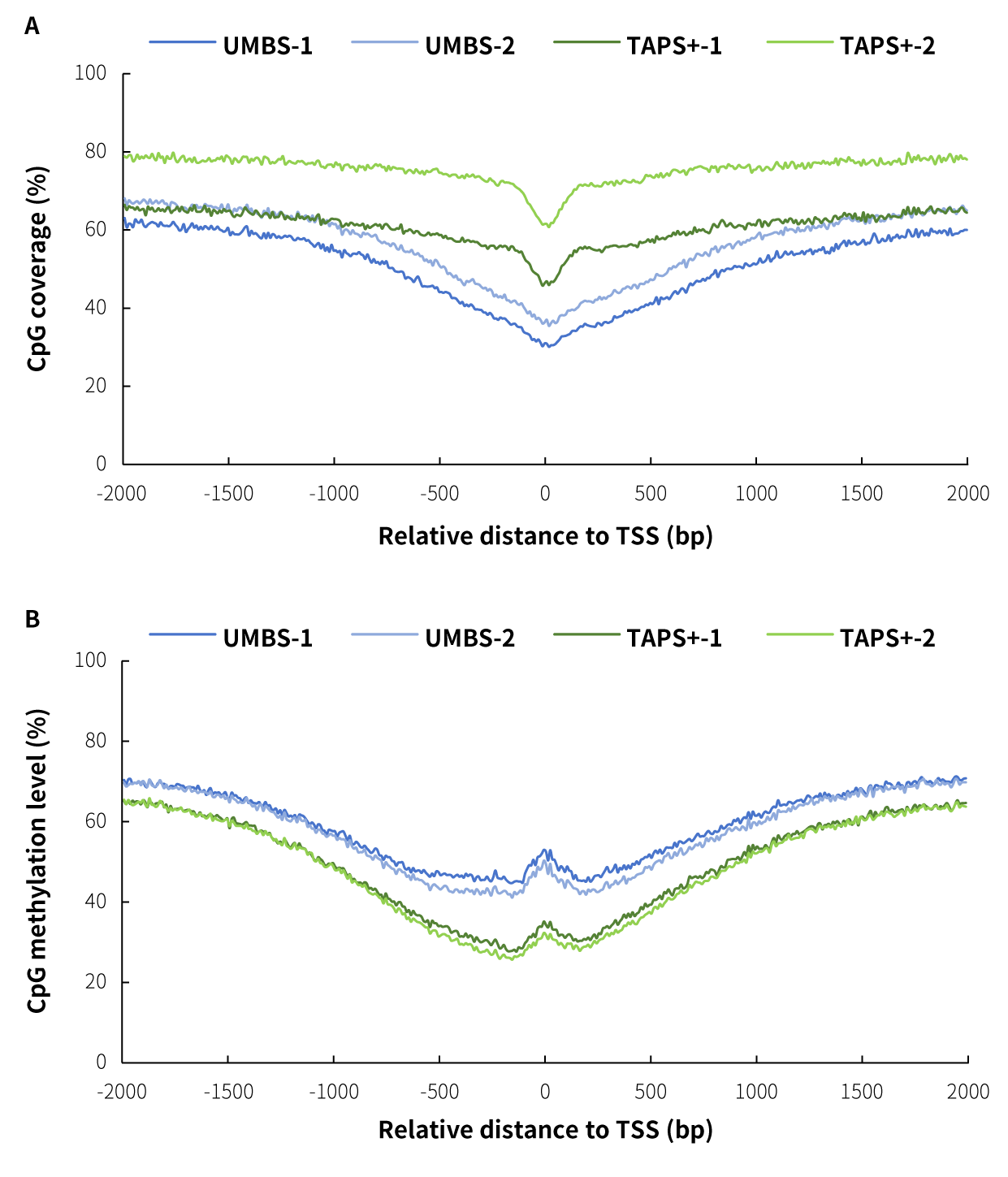
Figure 1. Detection performance of the TAPS+ and UMBS conversion assays for CpG sites in the TSS flanking regions of cfDNA samples. A. CpG site coverage within the region; B. CpG site methylation level within the region.
Note: Whole-genome sequencing was performed on methylation libraries using NovaSeq 6000 with PE150 configuration and 100 Gb sequencing data.
3.2 Efficient and Stable Methylation Conversion Performance
To thoroughly evaluate the methylation conversion performance of the TAPS+ method, methylation libraries were prepared using 50 ng of simulated samples with different methylation levels (0%, 50%, and 100%). Hybrid capture was then performed using the μCaler HyperMix Hybrid Capture Kit (for Illumina®) and a customized methylation detection panel. As shown in Figure 2, the TAPS+ method achieved a conversion efficiency of over 96% across samples with different methylation levels, demonstrating consistently high conversion efficiency and closely matching theoretical expectations. These results demonstrate that this method maintains stable and reliable conversion performance across a broad range of methylation levels, confirming its robustness and suitability for methylation analysis.
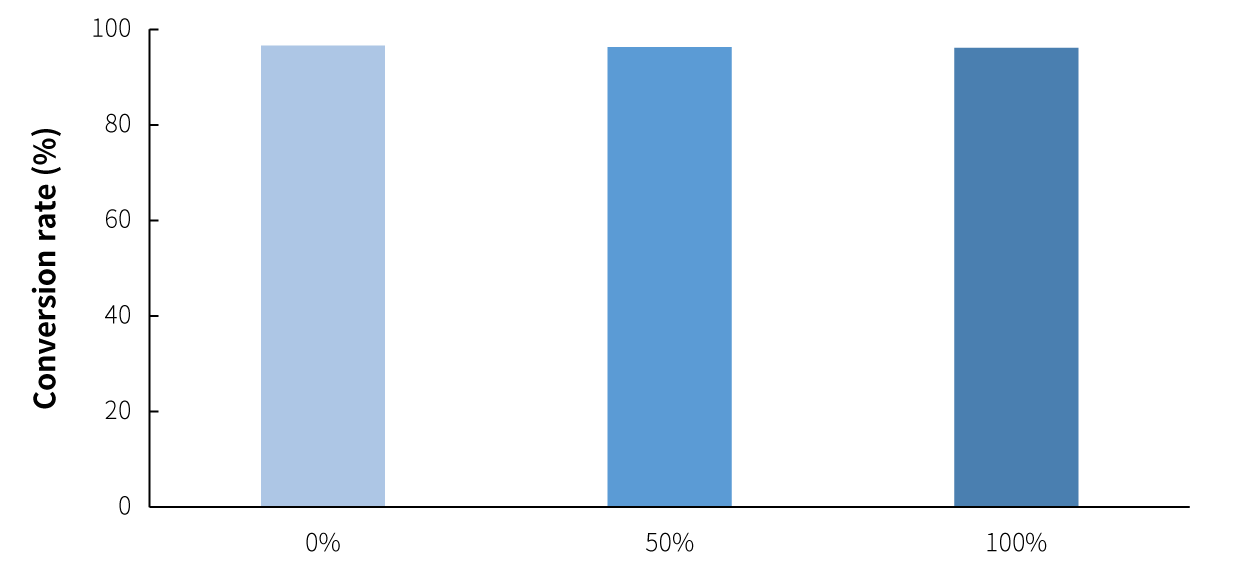
Figure 2. Consistent conversion efficiency of the combined workflow across samples with different methylation levels. Methylated pUC19 DNA was used as an internal reference to evaluate TAPS+ conversion efficiency. Sequencing was performed on the NovaSeq 6000 platform with PE150 configuration.
Note: Simulated samples were prepared by mixing human methylation-positive control DNA (100% Methylated DNA; Zymo, D5014-2) and unmethylated control DNA (0% Methylated DNA; Zymo, D5014-1) at different proportions to generate samples with different methylation levels (0%, 50%, and 100%).
3.3 Nanodigmbio Targeted Capture Solution × TAPS+: Capturing High-Quality Methylation Libraries
In this study, the μCaler HyperMix Hybrid Capture Kit (for Illumina®), in combination with a customized methylation detection panel, was used to efficiently enrich libraries with different methylation levels following TAPS+ conversion. As shown in Figure 3, the mapping rate remained consistently above 99%, while the on-target rate exceeded 85% across libraries with methylation levels of 0%, 50%, and 100%. The experimental results demonstrate good compatibility between Nanodigmbio’s hybrid capture system, including its accompanying probes, and TAPS+-converted libraries. Across library samples with different methylation levels, this combined workflow maintained stable and efficient target-region capture performance. It provides a reliable technical option for methylation detection in clinical research applications, including early cancer screening and liquid biopsy.
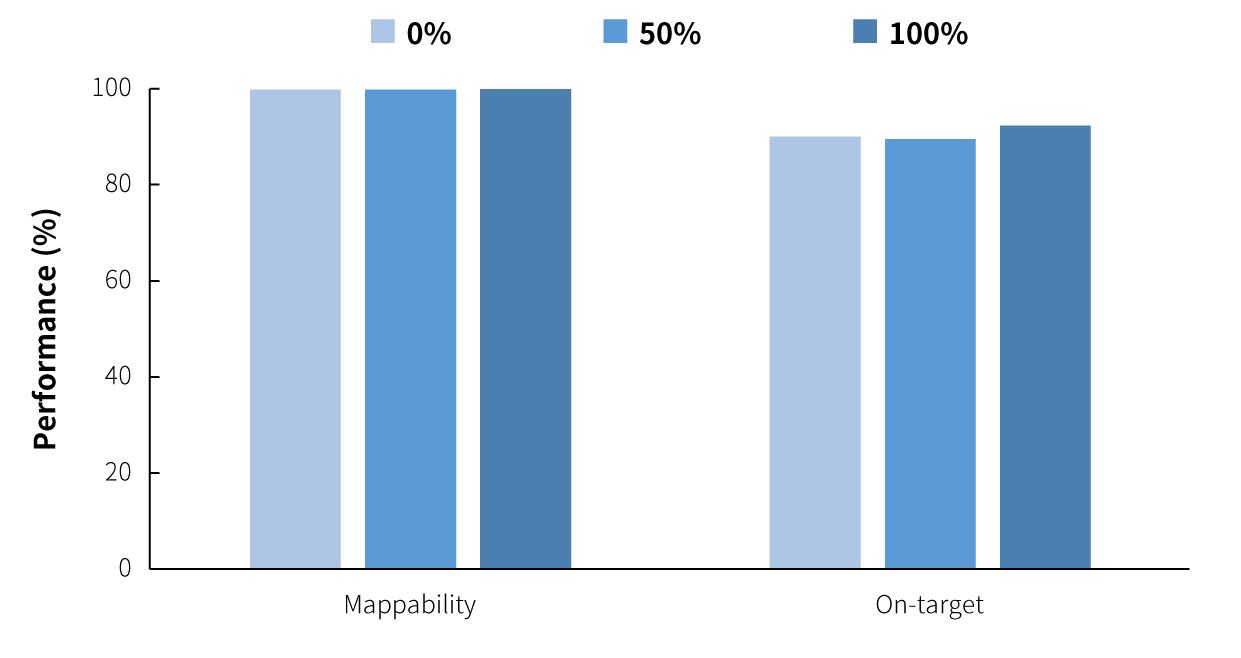
Figure 3. Capture performance of the combined assay for samples with different methylation levels.
3.4 Nanodigmbio Targeted Capture Solution × TAPS+: Accurate Detection of Multiple Variant Types
The positive-readout conversion method of TAPS+ enables simultaneous acquisition of methylation and mutation information from a single library. Combined with Nanodigmbio’s sensitive and specific targeted capture system, it enables accurate detection of multiple variant types, including SNPs, gene fusions, and deletions. As shown in Figure 4, the combination of Nanodigmbio’s targeted capture solution and TAPS+ technology accurately detected multiple variant sites in the reference standard, covering different variant types. The detected variant frequencies were also close to their theoretical values, demonstrating this approach's strong variant-detection capability. These results provide strong evidence that the combined assay can offer reliable technical support for the simultaneous detection of DNA methylation and genetic variants.
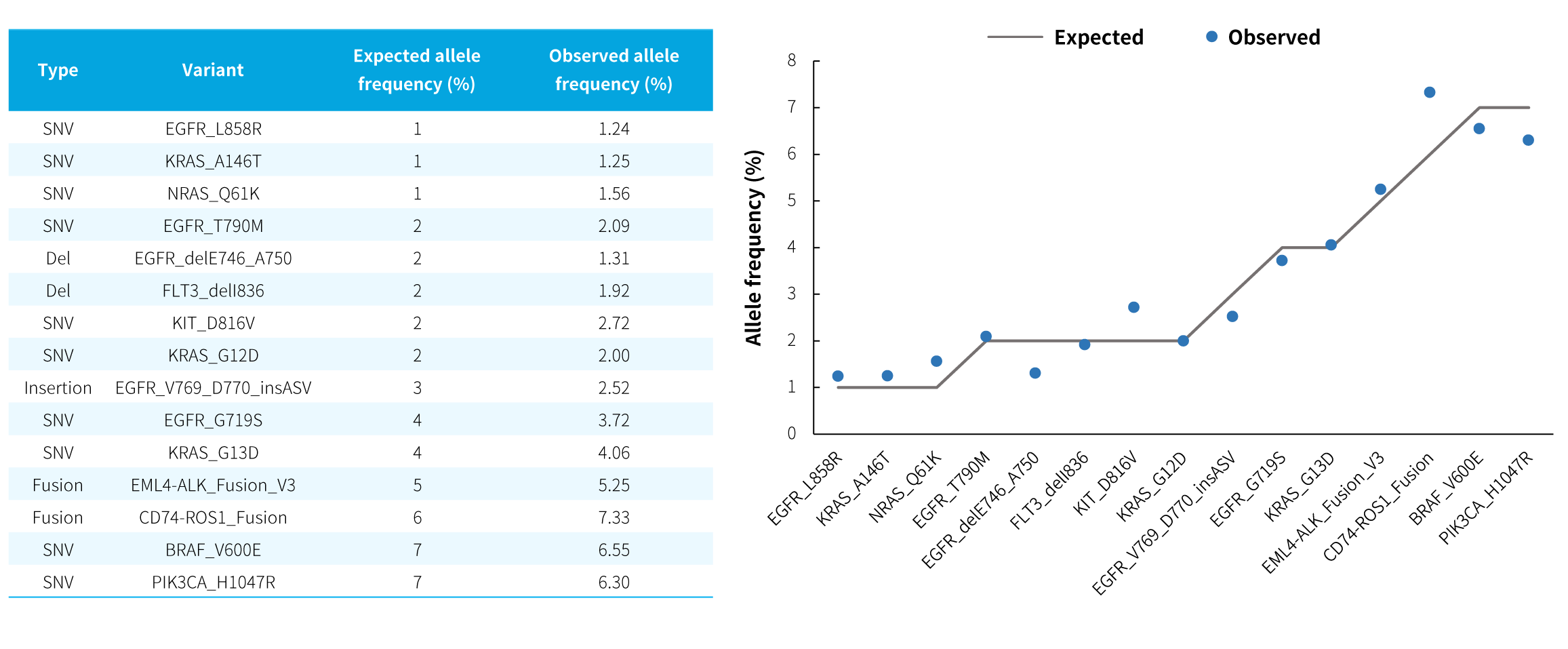
Figure 4. Concordance between variant frequencies detected in the captured sequencing data and the reported frequencies of the reference standard.
Note: The starting sample was 50 ng of Pan-cancer 800 gDNA reference standard (GeneWell, GW-OGTM800).
04 Conclusion
Leveraging years of accumulated expertise in targeted hybrid capture technology, Nanodigmbio has deeply integrated its proprietary probe design algorithms and well-established hybrid capture system with the cutting-edge TAPS+ technology. The experimental results demonstrate that combining the stable methylation conversion performance of TAPS+ with Nanodigmbio’s hybrid capture system enables accurate quantification of simulated samples with different methylation levels and effective detection of multiple types of genetic variants in reference standards. This allows simultaneous characterization of methylation status and genetic variant information within a single library, providing a new technical approach for combined methylation and genetic variant detection.
This powerful combination of TAPS+ technology and Nanodigmbio’s targeted capture solution not only validates the excellent compatibility between the two technology platforms but also further demonstrates Nanodigmbio’s comprehensive technical capabilities in rapidly integrating cutting-edge methylation technologies with its established product systems, optimizing them synergistically, and translating them into practical applications. It provides strong support for continued innovation and broader applications of methylation detection solutions.
【About Watchmaker Genomics】
Watchmaker Genomics is a life science company dedicated to pioneering high-performance enzyme engineering to drive breakthroughs in genomics, molecular diagnostics, and synthetic biology. Using advanced directed evolution and precision protein design technologies, Watchmaker has developed a range of molecular enzymes with industry-leading enzymatic performance. These enzymes improve the accuracy, sensitivity, and efficiency of next-generation sequencing (NGS) and molecular diagnostics (MDx) workflows. Headquartered in Boulder, Colorado, Watchmaker is committed to collaborating with world-class researchers, diagnostic developers and biotechnology companies to push the boundaries of molecular biology.
TAPS+ Technology and Product Inquiry
Watchmaker Genomics China Contact: Mr. Liang
Tel: 13693619015
Email: Haitao.liang@watchmakergenomics.cn
Website: watchmakergenomics.com
[1]. Liu Y, Siejka-Zielińska P, Velikova G, et al. Bisulfite-free direct detection of 5-methylcytosine and 5-hydroxymethylcytosine at base resolution[J]. Nature biotechnology, 2019, 37(4): 424-429.
[2]. Jin Y, Conneely K N, Ma W, et al. Whole-genome bisulfite sequencing of cell-free DNA unveils age-dependent and ALS-associated methylation alterations[J]. Cell & Bioscience, 2025, 15(1): 26.
[3]. Lister R, Pelizzola M, Dowen R H, et al. Human DNA methylomes at base resolution show widespread epigenomic differences[J]. Nature, 2009, 462(7271): 315-322.
Solutions
- Methyl Library Preparation Total Solution
- Sequencing single library on different platform--Universal Stubby Adapter (UDI)
- HRD score Analysis
- Unique Dual Index for MGI platforms
- RNA-Cap Sequencing of Human Respiratory Viruses Including SARS-CoV-2
- Total Solution for RNA-Cap Sequencing
- Total Solution for MGI Platforms
- Whole Exome Sequencing
- Low-frequency Mutation Analysis
Events
-
Overseas Exhibition Preview | Nanodigmbio Looks Forward to Meeting You at GENETICS 2026 in Moscow

-
Exhibition Preview | Nanodigmbio invites you to join us at Boston 2025 Annual Meeting of the American Society of Human Genetics (ASHG)
-
Exhibition Preview | Nanodigmbio Invites You to Join Us at WHX & WHX Labs Kuala Lumpur 2025, Malaysia International Trade and Exhibition Centre in Kuala Lumpur

-
Exhibition Preview | Nanodigmbio Invites You to Join Us at Hospitalar 2025, Brazil International Medical Device Exhibition in São Paulo

-
Exhibition Preview | Nanodigmbio invites you to join us at Denver 2024 Annual Meeting of the American Society of Human Genetics (ASHG)

-
Exhibition Preview | Nanodigmbio invites you to join us at Sapporo 2024 Annual Meeting of the Japan Society of Human Genetics (JSHG)
